| Summary |
|---|
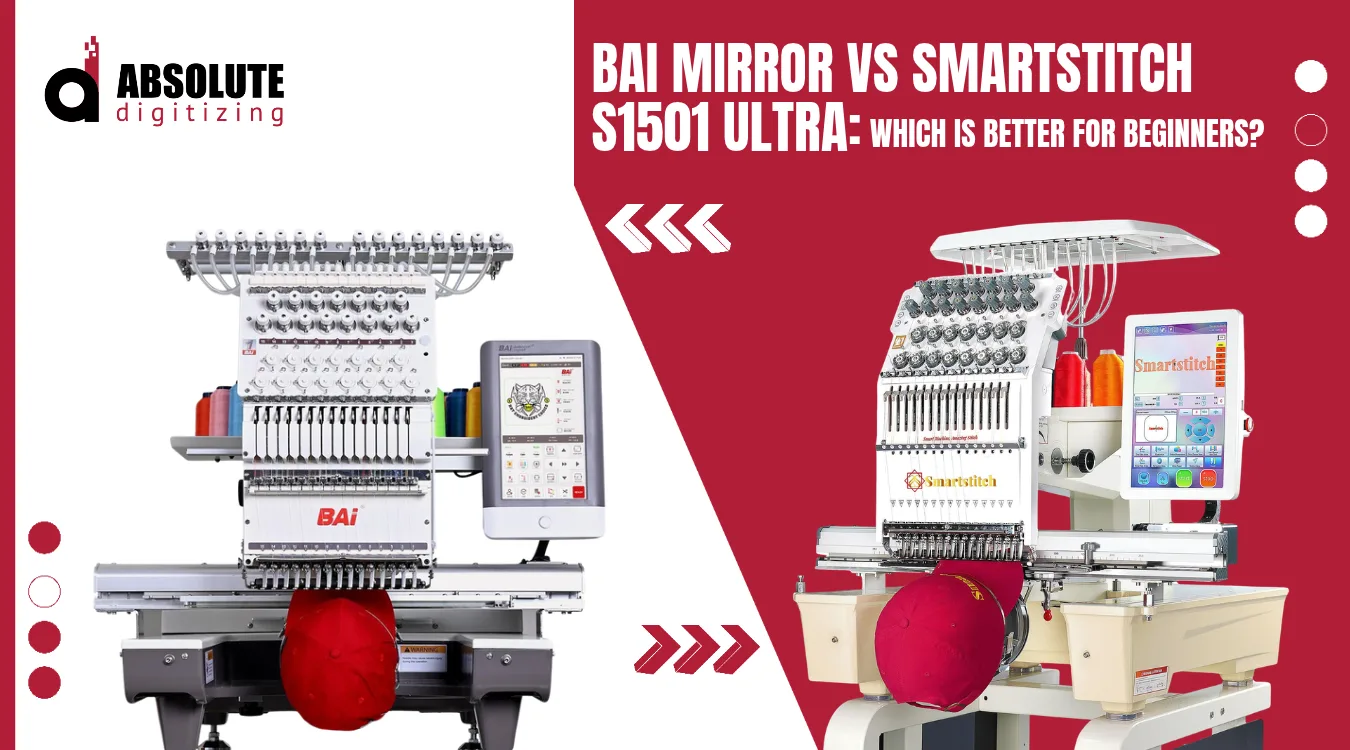
Both machines suit beginners, but your business needs decide which offers better value.
|
Buying your first 15-needle embroidery machine is a big step. You want to handle real orders without struggling through every project. But with so many features and prices to compare, choosing one can feel confusing.
The BAI Mirror and Smartstitch S1501 Ultra both offer business-ready features. However, a long feature list does not show how easy each machine is to learn, use, or maintain.
This guide compares prices, stitch quality, cap embroidery, setup, support, and long-term value. Whether you’re starting a home business or expanding a small shop, you’ll know what matters before buying.
Start your first projects with quality manual embroidery digitizing and get clean, stitch-ready designs from day one.
- Quick Answer: Which Machine Should Beginners Choose?
- BAI Mirror vs Smartstitch S1501 Ultra: Quick Comparison
- Price and Overall Value
- Embroidery Quality and Stitching Performance
- Hat Embroidery: Which Machine Performs Better?
- Ease of Setup and Learning Curve
- Customer Support, Warranty, and Spare Parts
- Maintenance and Long-Term Reliability
- Embroidery Files and Digitizing Requirements
Quick Answer: Which Machine Should Beginners Choose?
For most beginners, neither machine is the clear winner. Both have 15 needles and can handle shirts, jackets, and hat embroidery. The better choice depends on the work you plan to sell.
Here is where each stands out:
- BAI Mirror: A practical choice for everyday apparel, especially when a nearby dealer offers hands-on training and dependable support.
- Smartstitch S1501 Ultra: Worth a closer look for caps, with an upgraded cap driver and raised needle plate designed for hat embroidery.
However, features alone should not decide your purchase. Compare the full package price, included training, service access, and your main projects before spending your money.
BAI Mirror vs Smartstitch S1501 Ultra: Quick Comparison
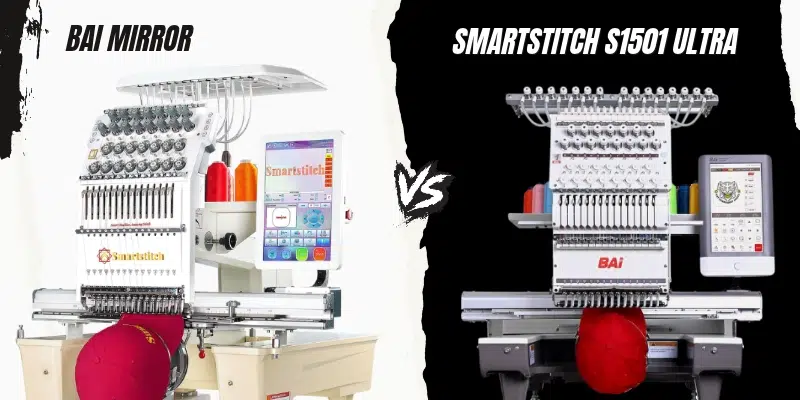
Both machines have 15 needles and one embroidery head for shirts, jackets, and caps. Each supports automatic color changes and USB or Wi-Fi transfer.
| Feature | BAI Mirror | Smartstitch S1501 Ultra |
|---|---|---|
| Needles | 15 | 15 |
| Embroidery area | 350 x 500 mm | 350 x 500 mm |
| Flat speed | Up to 1,200 SPM | Up to 1,200 SPM |
| Cap speed | Up to 850 SPM | Up to 900 SPM |
| Touchscreen | 10 inches | 12 inches |
| Connectivity | USB and Wi-Fi | USB and Wi-Fi |
| File formats | DST and DSB | DST and DSB |
| Cap hardware | Standard driver and hoops | Upgraded driver and raised needle plate |
What Matters Most for Beginners?
Both offer the same flat embroidery area, so neither wins on design size. Still, Smartstitch has a larger touchscreen and upgraded cap hardware. These features may suit shops making hats every day.
BAI’s standard cap setup also handles hats and common apparel. Its smaller screen does not necessarily make it harder to learn.
Finally, top speeds are not everyday speeds. Design complexity, hooping, and training shape your actual output.
Price and Overall Value
“The BAI Mirror costs $5,600 for warehouse pickup or $6,400 delivered through U.S. dealer BYLD Equipment. Smartstitch lists the S1501 Ultra at $5,599”
Both machines include useful accessories:
- Flat embroidery hoops in different sizes
- Cap driver, two cap frames, and hooping station
- Machine stand, tools, and starter supplies
BAI includes starter embroidery thread, bobbins, and stabilizer. Smartstitch offers 15 large thread spools, stabilizers, prewound bobbins, and a bobbin winder.
For training, BAI provides online tutorials and support groups. Smartstitch offers one-on-one online sessions and setup guidance.
Hidden Costs Beginners Should Know
However, the machine price is only part of your investment. You should also budget for:
- Extra embroidery thread and stabilizers
- Replacement needles and maintenance supplies
- Magnetic hoops for easier garment handling
- Custom digitizing for machine-ready designs
Before ordering, compare complete delivered packages, including taxes, shipping, and training. A machine with better starter supplies and reliable support may offer more value than one with a lower price.
Embroidery Quality and Stitching Performance
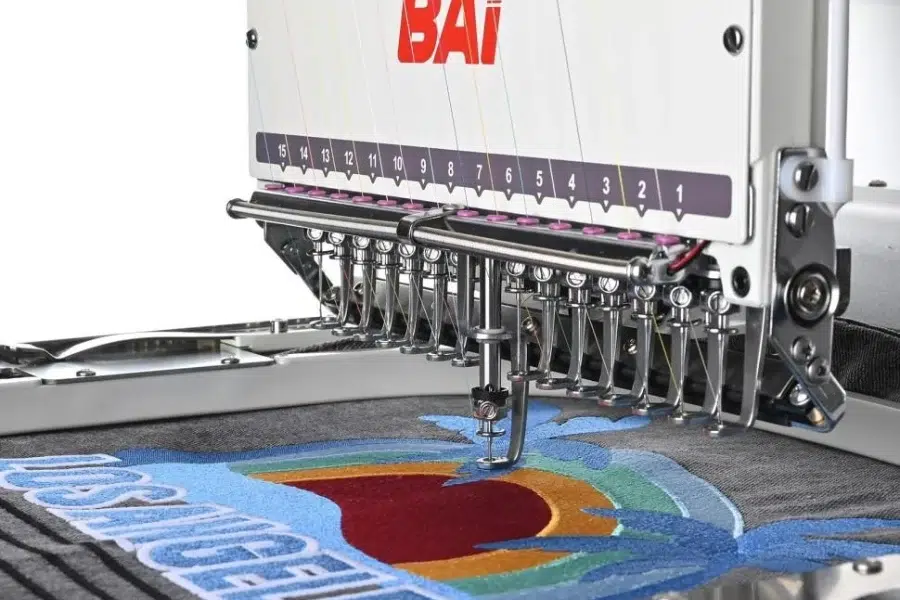
Both machines advertise speeds up to 1,200 stitches per minute (SPM) for flat embroidery. The BAI Mirror uses a servo motor, while the Smartstitch Ultra features a double vertical guiding system designed for smoother movement and better stability.
However, these features do not guarantee better stitching. Actual results depend on thread tension, machine stability, stabilizers, hooping, and digitized embroidery design.
Stitch Quality on Different Fabrics
Both machines can handle common embroidery projects, but each fabric needs proper preparation.
- Cotton shirts need suitable backing to prevent puckering.
- Hoodies need firm support to keep thick fabric from shifting.
- Polos require careful hooping to keep logos smooth.
- Detailed logos need correct stitch density, underlay, and stitch direction.
Why Slower Stitching May Work Better
For example, small lettering embroidery on a polo may lose clarity at high speeds, especially when tension or hooping is incorrect. A slower test run lets you check the results before starting a full order.
Similarly, dense logos on hoodies may need lower speeds and stronger stabilizers.
For beginners, clean and consistent stitching matters more than maximum speed. Neither machine has a proven quality advantage without testing identical designs under the same conditions.
Hat Embroidery: Which Machine Performs Better?
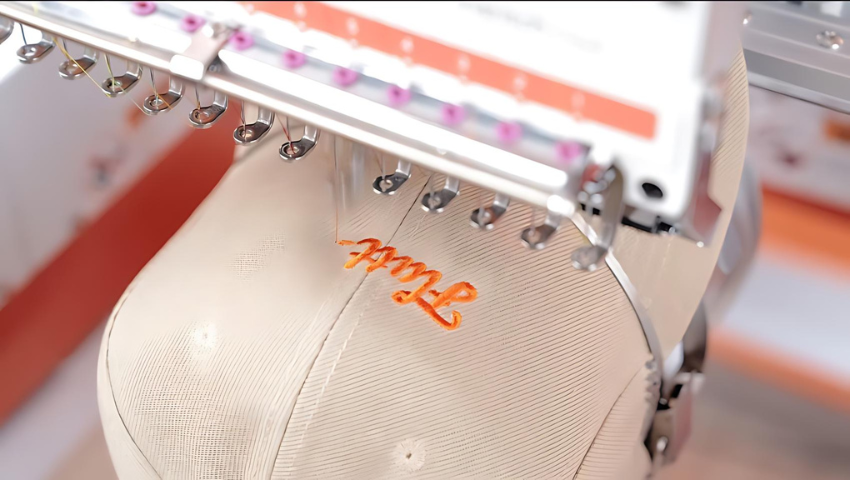
Hat embroidery can be tricky for beginners. Caps curve around the hoop, and stiff front panels need careful support. Both machines can stitch caps, but their hardware differs.
Cap Frames, Speed, and Structured Hats
The BAI Mirror comes with a standard cap driver, cap station, and two cap hoops. Its advertised cap speed reaches 850 stitches per minute.
The Smartstitch S1501 Ultra uses a redesigned cap driver and raised needle plate. It also advertises a picker-free circular trimming system and speeds up to 900 stitches per minute. These upgrades aim to make work near the brim easier.
What About Detailed Cap Designs?
Structured caps need firm hooping to keep logos centered. Curved surfaces also make registration harder, especially when designs extend toward the sides.
For 3D puff lettering, use suitable foam and stitch settings. For small text, reduce speed when needed and test the design to avoid gaps or uneven edges. A test stitch-out is useful before accepting a large hat order.
However, neither advertised speed guarantees a cleaner hat. Results also depend on cap shape, design quality, tension, and operator skill.
For beginners focused mainly on hats, Smartstitch offers the stronger cap feature list. Still, only matching stitch-out tests can show which performs better in practice.
Want to see the Smartstitch S1501 Ultra in action? Watch this official tutorial showing 3D cap embroidery on the S1501 Ultra, including a practical look at hat stitching.
Planning to embroider detailed logos or small lettering on caps? Get precision custom cap digitizing from Absolute Digitizing for clean, sharp stitch-outs.
Ease of Setup and Learning Curve
Setting up your first commercial embroidery machine takes patience. Both models include online learning resources, but their controls make the early steps feel different.
Touchscreen Controls and Training
The BAI Mirror uses a 10-inch touchscreen with a guided workflow for choosing a design, setting thread colors, and selecting a hoop. BAI also provides video tutorials and online support.
Meanwhile, the Smartstitch S1501 Ultra has a 12-inch touchscreen and eight physical shortcut buttons. Its setup videos, support group, and one-on-one virtual training offer extra guidance for new owners.
From Unboxing to Your First Stitch-Out
After assembling the stand and securing the machine, follow the maker’s setup instructions. Then:
- Thread all needed needles and check the bobbin.
- Load a DST design through USB or Wi-Fi.
- Select the right hoop and secure the fabric with stabilizer.
- Trace the design area and test thread tension.
- Run a small sample before starting a customer order.
However, learning the controls is only part of the job. You must also practice hooping, choosing stabilizers, and spotting stitch problems. Neither machine removes that learning curve.
Want to see what using a 15-needle machine looks like for a beginner? This hands-on BAI The Mirror review shows the owner’s first experience and embroidery projects, offering a useful look beyond the technical specifications.
Customer Support, Warranty, and Spare Parts
Reliable support matters when your first commercial machine stops during a customer order. Both brands advertise one-year limited warranties, but their service terms differ.
Warranty Coverage and Training
BAI offers online lessons, BAI TV videos, a 24/7 support group, and U.S. service options. Its warranty covers qualifying machine defects and functional accessories for one year.
Meanwhile, Smartstitch provides tutorials, weekly online classes, and live video training. Its one-year warranty covers eligible parts and labor but excludes shipping and technician travel. Standard accessories have only 90 days of coverage.
Spare Parts and Real-World Support
Both brands sell replacement parts. BAI advertises U.S. parts and local engineer support. Smartstitch provides most in-stock accessories, which ship from its U.S. warehouse within 4 to 14 days.
Before buying, ask these questions:
- Can a technician visit your area?
- How quickly can replacement parts arrive?
- Who pays for shipping and service visits?
For beginners, fast repairs and patient guidance often matter more than extra features, especially when a paid order is waiting.
Maintenance and Long-Term Reliability
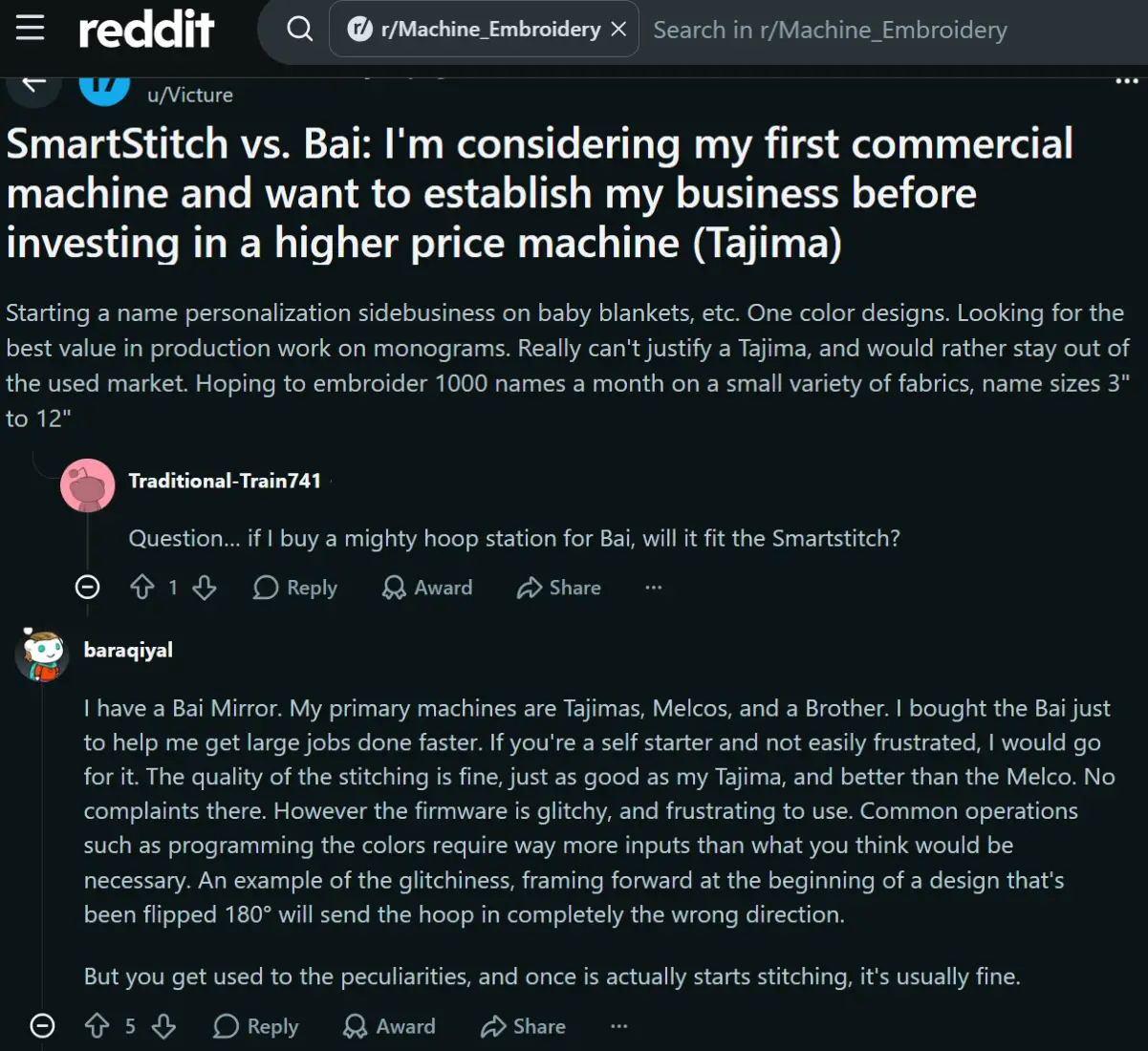
Real owner experiences also reveal common concerns. In this Reddit discussion, a BAI Mirror user praises its stitch quality but reports firmware issues. This shows why beginners should consider software reliability and ease of use before buying.
Both machines need regular care to keep orders running smoothly. BAI advertises fewer oiling points, while Smartstitch provides maintenance videos. Still, neither machine is maintenance-free.
Simple Care That Prevents Problems
Follow the manual for oiling points and timing. Remove lint around the needle plate and bobbin area. Check thread tension, clean the bobbin case, and replace dull or bent needles.
Common Problems Beginners May Face
Thread breaks may come from poor threading, incorrect tension, or damaged needles. If parts of a logo do not line up, check hooping and fabric movement. Frequent needle breaks call for a careful inspection before restarting.
Both brands sell spare parts, but stock and delivery times vary. Learn basic upkeep and confirm repair options before buying. Without comparable long-term testing, neither machine has a proven advantage in lifespan.
Embroidery Files and Digitizing Requirements
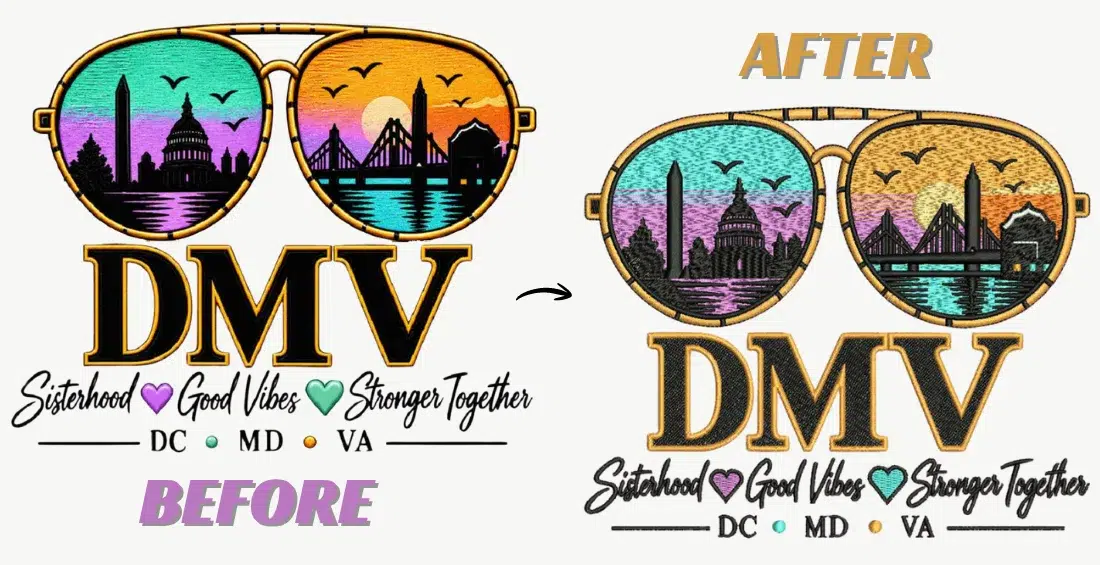
Both the BAI Mirror and Smartstitch S1501 Ultra read DST and DSB stitch files. These tell each machine where to place stitches. A JPG or PNG logo is only an image, so it needs digitizing before stitching.
Why Proper Digitizing Matters on Both Machines
Accurate digitizing sets underlay to support fabric, stitch density to prevent bulky areas, and pull compensation to keep shapes accurate. Stitch direction and sewing order also affect clean edges.
These details matter on curved caps and small letters. Poor settings can cause gaps, puckering, and uneven text.
Is Hiring a Professional Digitizer Worth It?
DIY software can cost hundreds of dollars, and mastering it takes practice. A skilled embroidery digitizer prepares your design for its fabric, size, and placement. Meanwhile, you can focus on customers, orders, and machine setup.
For your next logo, request a manually digitized DST file from Absolute Digitizing and start with a design built for stitching.
Which Machine Is Better for Starting an Embroidery Business?
The best choice depends on what customers order most. Both models suit small businesses, but each fits different products.
For Custom Apparel and Small Orders
The BAI Mirror is worth considering for T-shirts, polos, workwear, monograms, and personalized gifts. Its standard hoops and cap kit offer flexibility when orders change.
Good local training and service can make it a stronger purchase.
For Hat-Focused Businesses
However, shops selling structured caps, team hats, and branded logos may prefer the Smartstitch S1501 Ultra. Its upgraded cap driver and raised needle plate are designed for cap work near the brim.
Both are single-head machines, so each normally stitches one item at a time. Compare your expected orders, support, and full setup cost before choosing.
Final Verdict: BAI Mirror or Smartstitch S1501 Ultra?
Both machines offer useful features for beginners starting an embroidery business. However, the right choice depends on your projects, budget, and available support.
Choose the BAI Mirror if your local dealer offers better training, reliable service, and a complete package for everyday apparel embroidery.
Meanwhile, the Smartstitch S1501 Ultra is worth considering for hat-focused businesses. Its upgraded cap hardware and accessories may offer better value for your needs.
Remember, neither machine guarantees perfect stitching. Proper setup, practice, and quality digitizing make a real difference.
Ready to start your embroidery business? Contact Absolute Digitizing for professional manual embroidery digitizing and get a FREE quote today!
Frequently Asked Questions
Both machines suit beginners willing to learn commercial embroidery. BAI offers a guided touchscreen workflow, while Smartstitch provides a larger screen and virtual training. Your access to support matters most.
The Smartstitch S1501 Ultra offers more cap-focused features, including an upgraded cap driver and raised needle plate. However, both machines support structured caps and custom hat embroidery.
Yes. Both 15-needle machines handle hoodies, jackets, polos, and workwear. Proper hooping, stabilizers, needles, and stitch settings are essential for clean results on thick fabrics.
Both accept DST and DSB embroidery files. You need digitizing software or a professional digitizer to convert custom JPG, PNG, or logo artwork into stitch-ready files.
Yes, if you expect regular orders with several thread colors. Both machines offer automatic color changes and support different products. However, consider your budget, order volume, and training needs before investing.