| Quick Summary |
|---|
Etsy offers ready-made embroidery files and custom digitizing, while professional services provide more control for complex, repeat, and production-focused work.
|
Etsy has become a popular place to buy embroidery files, from inexpensive ready-made designs to custom digitizing services. For hobbyists and small projects, this can be a convenient and affordable option. However, embroidery quality depends heavily on how the file is digitized, especially when working with caps, small lettering, difficult fabrics, or customer orders.
A low-cost file may stitch perfectly, but it can also cause problems such as gaps, thread breaks, puckering, or poor registration if it has not been prepared properly. This becomes more important when you are embroidering expensive garments or running repeat production. The real question is which option gives you the right balance of price, quality, customization, and support for your embroidery project.
In this guide, we compare Etsy embroidery digitizing with professional digitizing services, including the advantages, risks, costs, support, and situations where each option makes the most sense.

- Is Etsy or a Professional Digitizer Better?
- Buying Embroidery Files on Etsy: The Pros and Real Risks
- How Reliable Are Custom Digitizing Services on Etsy?
- What Does a Dedicated Digitizing Company Usually Offer?
- Etsy vs Professional Digitizing: What Are the Main Differences?
- Why Can Cheap Embroidery Files Cost More in the Long Run?
- Which Embroidery Jobs Need More Specialized Digitizing?
- How Can You Check an Etsy Seller or Digitizing Company Before Ordering?
- What Should You Do If the Embroidery File Stitches Poorly?
Is Etsy or a Professional Digitizer Better?
Etsy can work well for stock designs, hobby projects, and simple artwork. It can be a practical choice when the job is small and does not need special setup.
When Does a Professional Digitizer Make More Sense?
A dedicated digitizer is usually the safer choice for:
- Customer orders and repeat production
- Caps, patches, and 3D puff
- Tiny lettering and detailed logos
- Difficult fabrics
- Jobs that need reliable revisions and support
For business work, that extra control can help reduce stitch problems and production delays.
Buying Embroidery Files on Etsy: The Pros and Real Risks
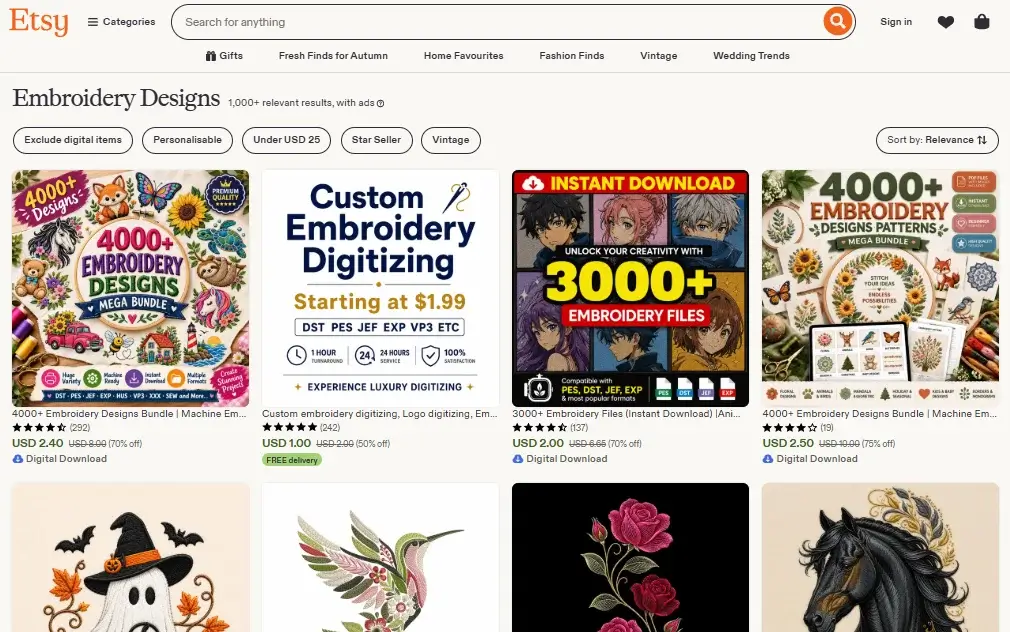
Etsy gives embroiderers many low cost options. Some premade embroidery designs cost only a few dollars and download right after purchase. This makes them useful for hobby projects, gifts, or simple designs on flat items.
What Are the Main Benefits?
- Low upfront cost
- Fast access to ready-made files
- Good for simple one-time projects
- Many designs and styles to choose from
- Easy access to seller ratings and reviews
However, a low price does not always tell you how well a file was tested.
What Are the Real Risks?
The Auto-Digitizing Trap
Some sellers may rely heavily on auto digitizing. As a result, the file may miss proper stitch paths, pull compensation, underlay, or balanced density.
Can 5-Star Reviews Prove Stitch Quality?
Not always. Some reviews focus on fast delivery or how the design looks on screen. Therefore, look for customer photos that show a real stitch-out.
Stock Files May Need Extra Checking
Stock Etsy files are built for set sizes and general use, so they may not suit every fabric or placement. However, many Etsy sellers also offer custom digitizing.
How Reliable Are Custom Digitizing Services on Etsy?
Etsy includes both instant-download embroidery designs and sellers who digitize custom artwork. Custom Etsy services can work for simple, one-time jobs, but the experience can vary from one seller to another.
What Should You Compare Before Ordering?
For custom work, check more than the price. Look at:
- Revision limits
- Response time
- Turnaround
- Specialty work such as caps, puff, and patches
- Real stitch-out samples
- Support after a test sew-out
However, business embroidery often needs the same quality and support across many orders. A professional digitizing company can offer a more steady workflow for repeat jobs, rush changes, and production support.
Why Does File History Matter?
Marketplace sellers may pause their shops, take breaks, or stop offering a service. That can make future reorders harder.
Meanwhile, a long-term digitizing partner can keep past files and job details organized.
This helps a reorder months later match the original size, density, trims, and stitch setup more closely.
What Files Will You Actually Receive?
Confirm whether the order includes DST, PES, JEF, EXP, or other formats, plus any extra sizes you need. Also ask whether an editable EMB or source file, production worksheet, thread chart, or design preview is included.
For commercial shops, a reliable digitizing company provides better continuity by keeping past files and job details ready for future reorders.
What Does a Dedicated Digitizing Company Usually Offer?
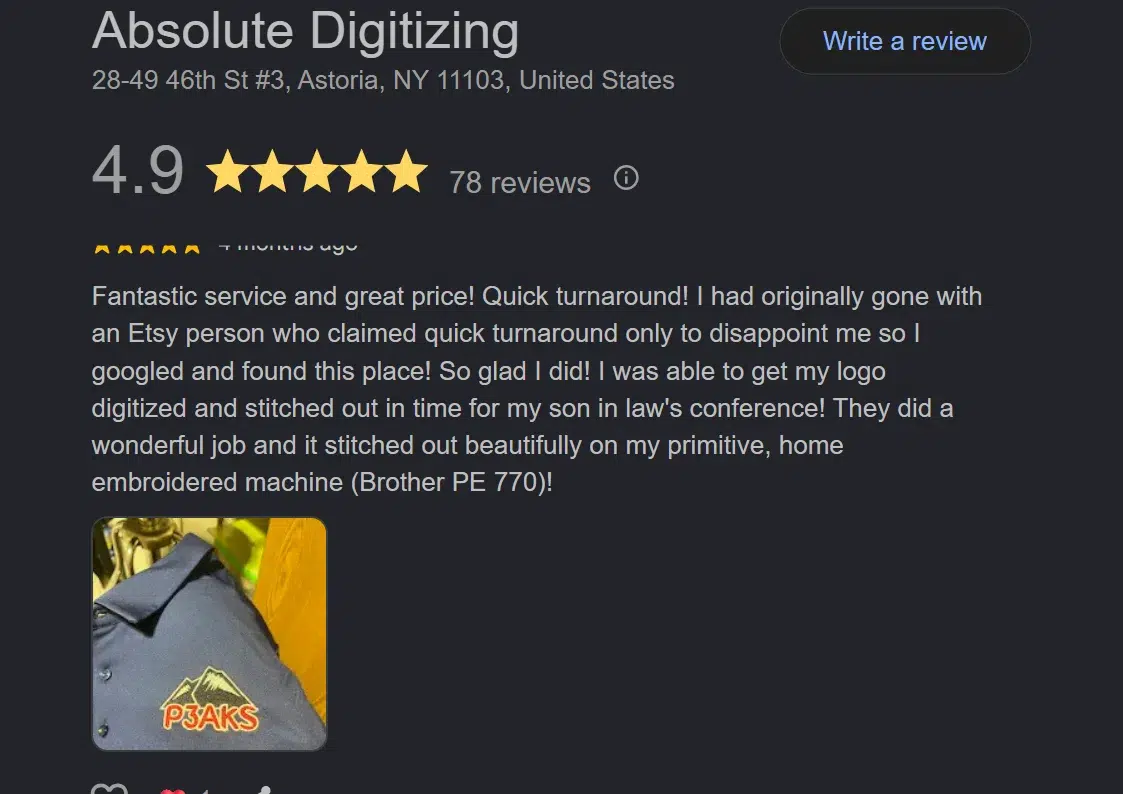
A dedicated digitizing company builds files around the actual embroidery job. The digitizer can adjust underlay, density, pull compensation, and stitch order based on the fabric, size, and placement.
How Does Technical Setup Help?
Proper stitch planning can:
- Reduce gaps and puckering
- Limit extra jumps and trims
- Improve registration
- Create a smoother production run
However, specialty work needs even more control. Caps often need center-out and bottom-up sequencing. Small lettering needs careful satin stitches, while 3D puff and patches need their own stitch structure and edge coverage.
What Support Can You Expect?
Many established companies also provide several machine formats, such as DST, PES, and EXP, along with revisions and rush options.
For repeat orders, they may also keep previous files and job details. As a result, embroidery shops can build a more consistent workflow with one digitizing partner.
This is why many embroidery shops prefer working with one reliable digitizing partner. Absolute Digitizing provides that workflow with in-house digitizers, custom setup, fast turnaround, free revisions, rush services, 24/7 live chat support, and multiple machine formats. Absolute Digitizing is available 7 days a week, including Sundays, so orders, revisions, and support can keep moving without weekend delays.
Want to see what professional digitizing looks like in a real embroidery workflow? Watch John from Embroidery Legacy review Absolute Digitizing and put the stitch quality, file setup, turnaround, and support to the test.
A clean sew-out starts with a file built for the actual job. Send your artwork to Absolute Digitizing for a free quote and see how a custom setup can work for your machine, garment, and design.
Etsy vs Professional Digitizing: What Are the Main Differences?
The better choice depends on the design, garment, and purpose.
Which Option Fits Your Project?
| Project Factor | Etsy May Work For | Professional Digitizing Makes More Sense For |
|---|---|---|
| Project type | Hobby crafts and gifts | Client orders and branded apparel |
| Design detail | Simple shapes and basic lettering | Detailed logos and very small text |
| Placement | Flat fabric and canvas bags | Caps, beanies, performance wear, and 3D puff |
| Order volume | One or a few items | Repeat or bulk production |
| Revisions | Minor or no changes | Size, density, and stitch adjustments |
As a result, business orders often benefit from the added control and revision support of a dedicated digitizer.
Why Can Cheap Embroidery Files Cost More in the Long Run?
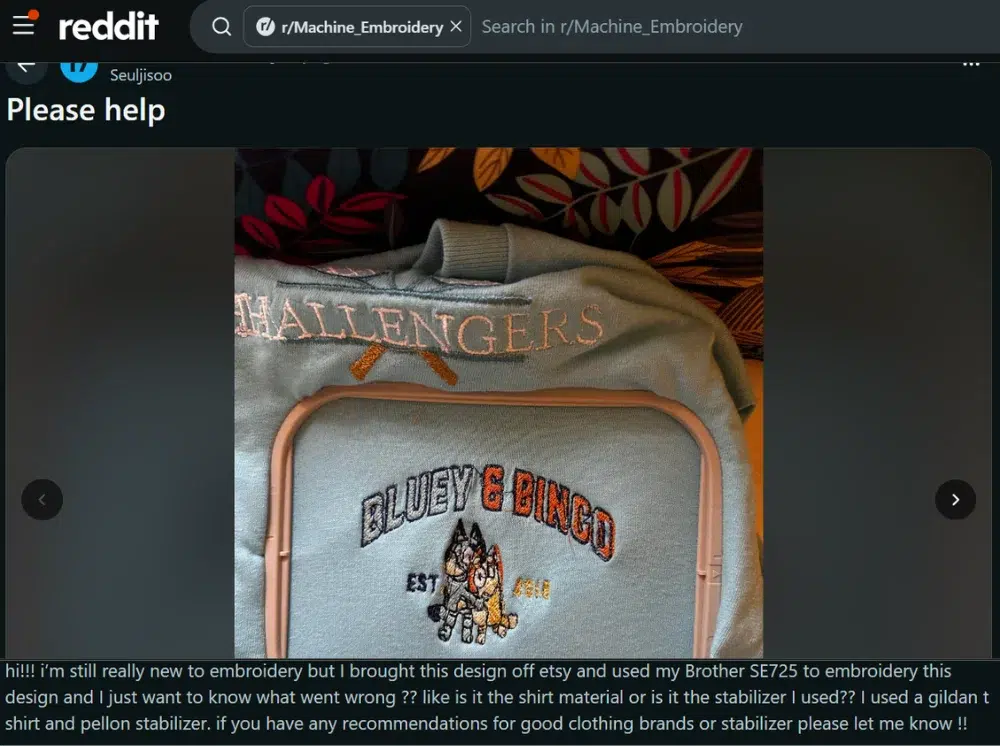
Embroidery groups often show stitch-outs with gaps, bird nesting, distorted shapes, or heavy stitching. Sometimes the machine setup is the cause. However, poor density, weak sequencing, or missing compensation can also come from the file.
What Is the Real Cost of a Cheap File?
The purchase price is only one part of the cost. A file that needs repeated testing can also use:
- Blank garments
- Thread and stabilizer
- Operator and machine time
- Extra test runs
- Re-digitizing or revisions
- Replacement customer garments
Meanwhile, production delays can affect delivery dates and slow other orders.
Think About Cost Per Usable File
A low-cost file that runs clean is good value. A low-cost file that needs repeated troubleshooting may become the more expensive option.
Because of this, business owners should compare the final usable result, not just the price shown at checkout.
Which Embroidery Jobs Need More Specialized Digitizing?
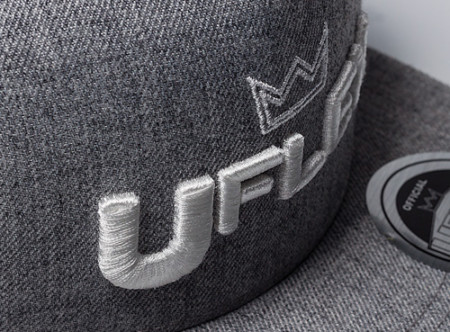
Some embroidery jobs need more planning because fabric, shape, and stitch style can change how the design runs.
1. Caps and Structured Hats
Cap designs often stitch better with center-out and bottom-up sequencing to reduce shifting and distortion.
2. Small Lettering
Tiny text has little stitch space. It needs careful underlay, pull compensation, density, and fewer unnecessary trims.
3. 3D Puff
Puff embroidery designs need foam-aware stitch planning, enough coverage, and clean finishing so the foam stays hidden.
4. Patches and Appliqué
Placement lines, tack-down stitches, border coverage, and stitch order must work together.
5. Stretchy or Textured Fabrics
Knits, piqué, fleece, and towels may need different underlay, density, and stabilizing choices.
6. Large Jacket-Back Designs
Long stitch runs can make poor sequencing, extra trims, and registration issues more noticeable.
7. Coloreel Embroidery
Coloreel embroidery needs different color planning because thread is colored during stitching. Gradients, color-change precision, stitch direction, and entry and exit points all affect the final look.
How Can You Check an Etsy Seller or Digitizing Company Before Ordering?
A low price or high rating does not tell the full story. Before ordering, check how the seller handles real embroidery work and what support comes with the file.
What Should You Check Before Paying?
- Look for real embroidered sew-outs, not only digital previews.
- Check customer photos and stitched samples.
- See if they have handled similar logos or garments.
- Confirm they ask for the final design size.
- Tell them the fabric and garment type.
- Confirm the placement, such as cap, chest, or patch.
- Check that they provide your machine format.
- Ask what revisions are included.
- See whether they can adjust the file after a test sew-out.
- Check experience with puff, patches, caps, or small lettering.
- Confirm commercial-use rights if needed.
- Ask whether editable or source files are available.
Because of this, a little checking before checkout can prevent costly fixes later.
What Should You Do If the Embroidery File Stitches Poorly?
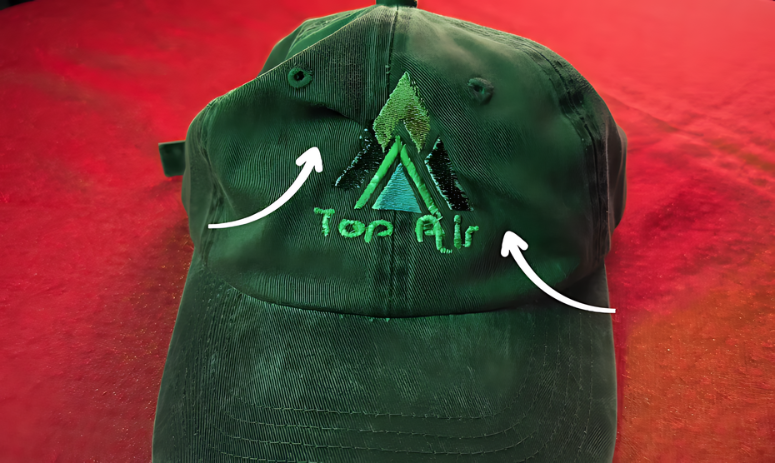
Stop the run before using more garments or materials. Then check the setup before blaming the embroidery file.
What Should You Check?
- Was the design resized?
- Is the stabilizer right for the fabric?
- Is the garment hooped firmly and evenly?
- Is the machine threaded correctly?
- Is the thread tension normal?
- Is the needle right for the fabric and thread?
- Does the same flaw appear in the same spot?
- Does the density or stitch order look wrong?
However, if the same problem keeps appearing after setup issues are ruled out, the file may need changes. Send the digitizer a clear stitch-out photo and explain where the problem starts.
When Etsy May Be Good Enough
Etsy can be a practical choice when the project is simple and the risk is low. Premade files also work well when you need a quick design without custom setup.
When Can Etsy Be a Good Fit?
- Hobby embroidery and personal projects
- One-time gifts or simple designs
- Premade files in the size you need
- Low-cost test projects
- Sellers with real stitch-out photos and strong reviews
However, check the file size, included embroidery formats, and seller support before buying. A proven seller can make Etsy a useful option for smaller, less demanding embroidery jobs.
When You Should Hire a Professional Digitizer
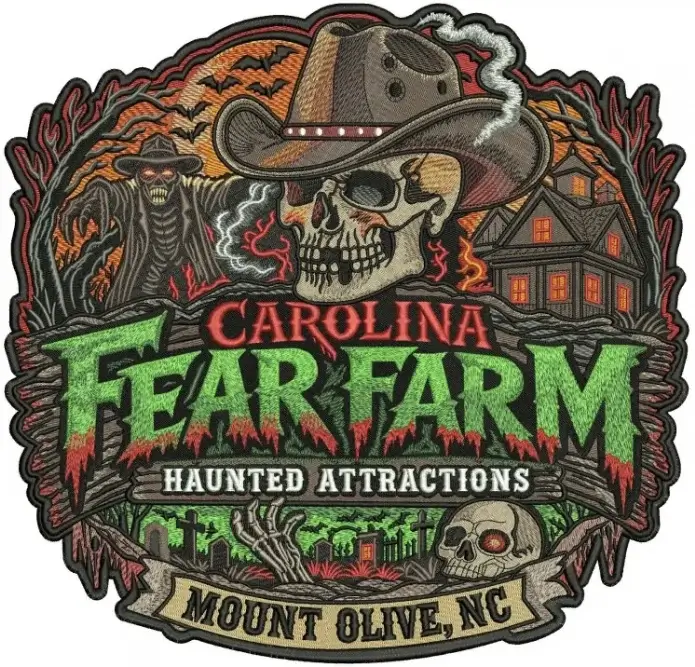
Professional digitizing makes more sense when the embroidery job has little room for error. This is especially true for customer orders, repeat production, and branded apparel where wasted garments can quickly raise costs.
Which Jobs Need More Control?
A skilled digitizer is especially useful for:
- Detailed or multi-color logos
- Small lettering
- Caps and structured hats
- 3D puff, patches, and appliqué
- Stretchy, thick, or textured fabrics
- Exact size or density changes
- Tight production deadlines
Moreover, professional support can save time when a test sew-out needs changes. Instead of fixing the file yourself, you can request adjustments and keep production moving.
For embroidery shops, a long-term digitizing partner can also make repeat jobs faster and more consistent. Over time, this can be cost-effective while keeping stitch quality the main focus.
Final Thoughts
Etsy can be a smart choice for hobby projects, simple designs, and quick one-time embroidery. However, business orders need more than a low price. They need the right stitch setup, fabric planning, clean sequencing, and support when changes are needed.
Poor digitizing can waste thread, blanks, and machine time. It can also turn an expensive jacket, cap, or customer garment into a loss.
For repeat production, small lettering, caps, patches, 3D puff, and detailed logos, professional digitizing gives you more control and consistency.
Send your artwork to Absolute Digitizing for a quick quote and professional digitizing tailored to your design, fabric, and embroidery requirements.
FAQs
Resizing a pre-digitized machine file by more than 10–15% without digitizing software degrades stitch quality. Resizing changes the design’s dimensions without adjusting the total stitch count, leading to bulletproof density when scaled down or loose, gapping stitches when scaled up.
Puckering and gaps typically stem from improper pull compensation and underlay stitching. Premade files are often generated using automated software settings that fail to account for how push-and-pull forces distort stretchy fabrics like piqué knits, fleece, or performance wear.
It depends entirely on the seller’s licensing terms. Many instant-download designs include personal-use licenses only, or cap production at a set number of items (e.g., 50 to 100 units). For client uniforms and trademarked logos, use custom digitizing where you own full commercial production rights.
Machine files like DST, PES, and EXP contain stitch commands for the embroidery machine. Editable files like EMB and PXF keep design settings such as density, stitch angles, and underlay, making clean edits easier.
Most individual Etsy sellers only supply the embroidery files. Dedicated digitizing companies provide a production run sheet (PDF) showing the exact stitch sequence, needle stop commands, color assignments, thread trim counts, and total dimensions to help the machine operator avoid hoop errors.
Switch when you embroider on customer-supplied blanks, run orders on structured caps or 3D puff, or require repeat orders. The labor and scrap cost of ruining a single premium jacket or hat far outweighs the cost difference of a professionally prepared embroidery file.