
AI is transforming every industry and the embroidery world is stitching its way into the future too. One of the most exciting developments is the rise of AI embroidery digitizers, tools that use artificial intelligence to automatically convert images into embroidery-ready files. Traditionally, this process required skilled digitizers to manually map out every stitch, but AI is now making it faster, smarter, and more accessible.
As AI-powered tools become more common in design and stitching, even beginners can create high-quality embroidery designs with minimal effort. From simple logos to intricate patterns, AI digitizers are changing the game for hobbyists and commercial businesses alike.
In this blog, we’ll explore how AI embroidery digitizers work, their benefits and limitations, and how they’re reshaping the embroidery landscape.
What Is an AI Embroidery Digitizer?
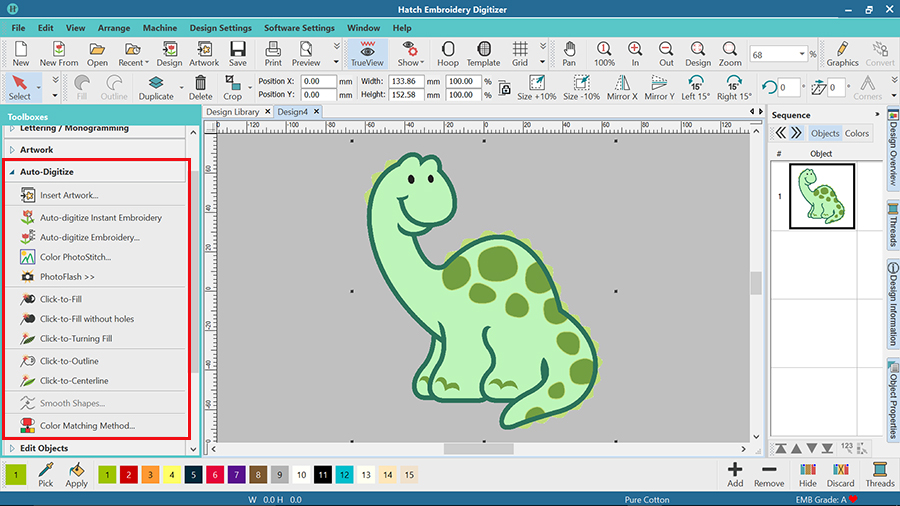
An AI embroidery digitizer is a smart software tool that uses artificial intelligence to automatically convert images into embroidery files that machines can read and stitch. These files are typically in formats like DST, PES, or EXP, depending on the embroidery machine being used.
Unlike traditional digitizing—where a skilled human manually decides every stitch and path—AI-assisted digitizing uses advanced algorithms to handle much of the work for you.
Instead of spending hours plotting each detail, AI can:
- Detect object outlines
- Assign suitable stitch types (like satin, fill, or running stitches)
- Adjust stitch density based on the design and fabric
- Add underlay stitching to stabilize the design
- Optimize the stitch path for efficient machine operation
Pros and Cons of Using AI for Embroidery Digitizing
AI embroidery digitizers bring a lot of benefits to the table, especially for those looking to save time and streamline their workflow. But like any technology, there are also a few limitations to consider.
Pros
- Speed and Automation: AI drastically cuts down the time it takes to convert an image into a stitch-ready embroidery file. What used to take hours can now be done in minutes.
- Lower Cost per Design: Since AI requires less manual effort, it can reduce the cost of digitizing—especially helpful for businesses dealing with large volumes of designs.
- Beginner-Friendly: You don’t need years of experience to start digitizing. AI tools are user-friendly and allow beginners to create professional-looking files with minimal effort.
Cons
- Limited Creativity and Custom Touch: AI may not match the artistic eye of an experienced digitizer, especially when it comes to creative interpretations.
- Struggles with Complex Designs: Highly detailed or textured images can confuse AI, leading to poor stitch paths or uneven fills.
- Manual Corrections Often Needed: Many AI-generated files still require a human to step in and clean things up for better quality and fabric compatibility.
Popular AI Embroidery Digitizer Tools and Software
Several embroidery software programs now include AI-powered features to speed up digitizing and improve stitch quality. Let’s take a closer look at some of the most popular options on the market:
Wilcom Embroidery Studio
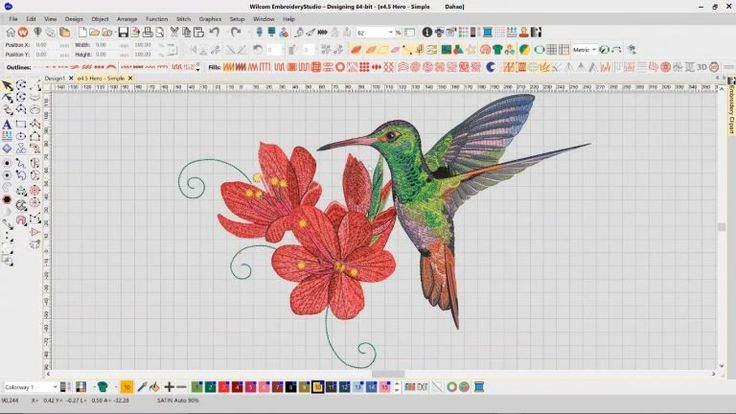
Wilcom is one of the most trusted names in the embroidery world. Its auto-digitizing feature uses intelligent algorithms to convert images into stitch files with minimal input. While Wilcom still encourages manual editing for best results, its AI capabilities—like automatic underlay suggestions, stitch type selection, and fabric-aware settings—help speed up the process significantly. It’s a favorite among professional digitizers for its precision, depth, and customization.
Hatch Embroidery Software
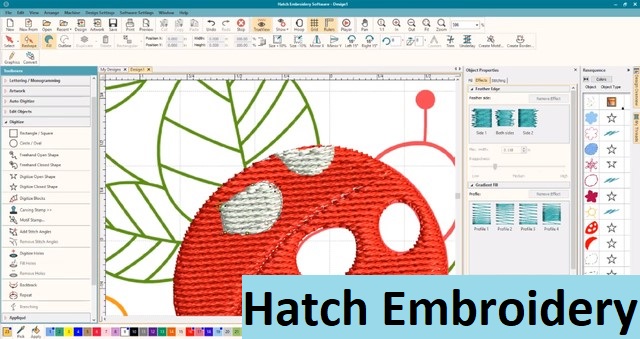
Developed by Wilcom for small businesses and hobbyists, Hatch is a more affordable, user-friendly option that also comes with powerful AI-driven tools. Its Auto-Digitizer feature can transform a JPG or PNG into an embroidery-ready file in just a few steps. Hatch also includes smart fill stitching, auto-pathing, and density control, making it great for both beginners and small commercial operations.
Ink/Stitch

Ink/Stitch is a free, open-source extension for Inkscape, designed for basic embroidery digitizing. It includes basic auto-fill and pathing tools, and while it lacks advanced AI functions found in commercial software, it’s constantly improving. It’s ideal for hobbyists, DIY crafters, or those just getting started with embroidery digitizing.
New AI-Powered Tools
New players in the market are developing tools that use machine learning and cloud-based AI to handle even more of the digitizing process automatically. Some offer web-based interfaces where you upload a design, and the tool outputs a stitch file within seconds. These platforms are gaining popularity due to their speed, simplicity, and low learning curve, although they may still need manual touch-ups for complex jobs.
Comparing AI Digitizing with Manual Digitizing
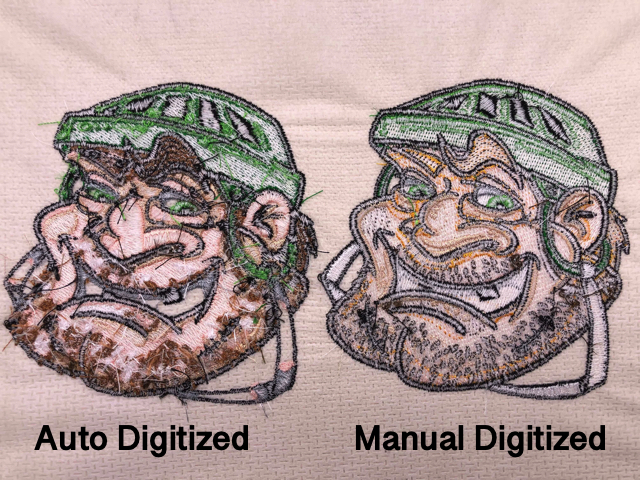
When it comes to embroidery digitizing, there’s a clear difference between work done by a human expert and files generated by AI. Manual digitizing gives you full creative control. A skilled digitizer decides the stitch types, directions, densities, and layering techniques based on the design and fabric. This hands-on approach allows for precise customization and is especially useful for complex designs or textured fabrics.
In contrast, AI digitizing is all about speed and consistency. With just a few clicks, AI tools can detect shapes, apply stitch types, optimize paths, and deliver a ready-to-sew file. This is ideal for simpler jobs like basic logos or text, where artistic interpretation isn’t as critical.
However, AI does have its limitations. It may not handle intricate shading, special effects, or unusual fabrics as well as a trained digitizer. That’s why many embroidery professionals prefer a hybrid workflow—using AI to handle the initial conversion, then stepping in to make manual adjustments where needed.
This combination brings the best of both worlds: the efficiency of AI and the precision of human expertise, making it a smart approach for both small businesses and large-scale embroidery operations.
When to Use an AI Embroidery Digitizer
An AI embroidery digitizer is a great tool when you need speed, simplicity, and efficiency. It’s especially useful for basic logos, text-based designs, and simple artwork that doesn’t require detailed customization.
If you’re a beginner or hobbyist, AI tools are a great way to get started. You don’t need advanced digitizing knowledge—just upload your image, and the software will create a stitch file in minutes.
For bulk orders or repeat jobs, AI can help save time and reduce costs. It automates repetitive tasks, making it easier to handle large volumes without sacrificing consistency.
However, not every design is AI-friendly. Highly detailed graphics, artistic portraits, or textured effects often require a manual touch to look their best. AI may also struggle with specialty fabrics or threads, where stitch angle and density need expert adjustment.
In those cases, a professional human digitizer ensures quality and fabric compatibility. Many embroidery shops combine both approaches—letting AI do the first draft and then refining it manually.
Why You Still Need Professional Embroidery Digitizing Services (Even With AI)
While AI embroidery digitizers offer speed and automation, they still can’t replace the value of human expertise. A professional digitizer knows how to fine-tune designs based on fabric type, thread behavior, and customer preferences—something AI often overlooks.
Even the best AI tools require learning, setup, and cost, making them less practical for occasional users. That’s where services like Absolute Digitizing come in. You save time, money, and effort by letting experts handle the work, so you can focus on other areas of your business. It’s a smarter, more reliable option for quality embroidery every time.
What Reddit Users Say About AI vs. Manual Digitizing

Let’s take a quick look at what the embroidery community on Reddit has to say about AI digitizing—and it’s clear that manual digitizing still has the upper hand in their eyes.
According to many experienced users in the r/Machine_Embroidery subreddit, while AI tools may seem impressive at first glance, they often fall short in real-world stitching. Common complaints include poor stitch angles, messy fills, and lack of fabric awareness—things that experienced human digitizers handle instinctively.
Several Reddit users compare AI auto-digitizing to AI-generated images: they might look okay at first, but on closer inspection, the flaws become clear. The community strongly believes that human knowledge, creativity, and hands-on control are irreplaceable, especially when quality matters.
Conclusion
AI embroidery digitizers are powerful tools that are reshaping how the embroidery world works. They offer speed, convenience, and accessibility, making it easier than ever to turn artwork into stitch-ready files. Whether you’re a beginner or a busy business owner, AI can be a helpful part of your workflow.
However, the best results still come from a mix of technology and expert oversight. Human digitizers understand the nuances that machines can’t—like fabric stretch, thread tension, and design balance.
If you’re aiming for flawless embroidery with zero hassle, let the pros at Absolute Digitizing handle it for you!